Two Become One
Marriage, Healing, One Flesh
That is why a man leaves his father and mother and is united with his wife, and they become one flesh. Genesis 2:24 (NIV)
Written By: Andrea Twining
Two Become One
As I sat down to write, I began to imagine myself sitting at a table surrounded by women I’ve done life with through different seasons. In this gathering of my imagination, I revisited our stories, the hard questions that were asked, the counsel being offered, the praise and joy filled moments in victories won. Recognizing at the heart of these memories was the reminder that we lent to one another of the faithfulness of God. I hope this writing offers this reminder of His faithfulness for you as we are united in Spirit and truth as women here.
I’m still a wife in the making. I have no doubt there are more valleys to walk through and mountaintops to celebrate. I in no way want to present myself as someone who has walked this road perfectly. What I wish to offer to you is some wisdom I have picked up along the way as I wrestled with what Scripture had to say about two becoming one over the span of several years. One of the most startling things I uncovered within my own marriage was that sometimes we can sincerely desire a God-honoring marriage while unknowingly building it on a framework that works against the very thing God designed it to be.
In the Beginning
When I got married, I was newly saved and genuinely excited about the idea of building a life with my husband. We would be honest with one another. We would be faithful. We wouldn’t keep secrets or treat divorce as an escape route when things got hard. We’d pray together, go to church, be open to each other's needs and wants, and face life making decisions as partners. We would be united through the good, the bad and everything in between.
I was excited to be my husband’s partner and to have him be mine. Time went on and with it like for most came the problems of two imperfect people trying to make a life together. Each with our own struggles that the heat of marriage would bring to the surface. And time would tell us that there was a difference between the kind of partnership both my husband and I envisioned and the oneness God had designed for marriage. The greatest reworking of our married identity for me at least, would be directed at the thoughts about partnership and union in marriage we operated out of. I would later come to see that we were actually working against God’s design for marriage in certain ways; our beliefs about partnership between husband and wife were driving us apart.
A Foundation Breaks Loose
Genesis 2:24 has become for me, the fountain from which all else in marriage flows. I know that’s a bold statement. I’ve come to believe that when we misunderstand, neglect, or distort God’s design for oneness, we can unknowingly quench the very things we’re working so hard to cultivate in our marriages. Bitterness takes root. Resentment grows. The soil that once seemed fertile becomes parched and brittle: cracks begin to form where we long for connection. The earth shifts and two find a chasm between them that feels too big to bridge.
I had wise and discerning believers point me to this verse and encourage me to study it prayerfully. “That is why a man leaves his father and mother and is united to his wife, and they become one flesh.” -Genesis 2:24 (NIV) I’d read it and think, Well, that’s what we did. We “left” our parents to become husband and wife and we’re doing this marriage thing. How is this helpful? One; this word was my stumbling block. I had thought I knew and understood oneness and sacrifice and partnership, which was why I kept tripping over it.
Partnership Built On Sand
As the layers began to be peeled back, I started to recognize that our partnership was built on sand despite our belief that Christ was our foundation. The sand was held together by Christian values, love, and a mutual desire to build a good life, which made it seem sturdy for a time. But beneath it was the belief that we could build a faithful life together while still holding parts of ourselves and our identities apart from our marriage.
In this framework, negotiating terms and defining fairness become central to everything from responsibilities and parenting to finances and personal time. Even Scripture can become a set of terms to negotiate rather than wisdom that reshapes how we live together. This was often what our home looked like. We made big decisions together, then went about our separate days and duties, checking boxes and keeping score.
We believed we were working together, even though it began to feel less so. We continued to measure whose contributions earned more privileges-as though some debt remained to be settled and selfishness would seem justifiable to one while fueling resentment in the other.
We want to be loved, valued, respected, supported, and understood. We want our dreams to matter, our efforts to be recognized, and our needs to be considered. We don’t want a one-sided relationship and no one wants to be on the wrong side. These desires aren’t wrong. Marriage needs honest conversations about responsibilities, individual callings, goals, and room for pink to be pink and blue to be blue. The trouble begins when a checklist or a scorecard becomes the primary measure of whether the marriage is working to determine who has contributed more to the wins, the failures, the inability to break out of cycles.
We may still love each other, share a home, raise children, pay bills, and function well as a team. Yet slowly we become two separate people trying to make a shared arrangement work for each of us. Marriage begins to feel like a contract expected to yield a reasonable return on our investment and desensitizes us to the emotional, spiritual and physical needs spouses are supposed to cherish.
The trap is subtle: we can believe we’re building a life together while inadvertently cultivating a life of separateness. But when the storms come, Jesus taught that they expose what our foundations were built upon. Christian values and good intentions may make the founding look sound, but they cannot sustain a union that has never truly learned to live as one in Christ.
A Fresh Look at Oneness
Biblical oneness invites us into an entirely different framework to build a life from. It is a framework infused with a divine principle that calls spouses to a higher purpose outside of themselves; no arrangement between lovers could negotiate the blessings and strength to not only withstand trials but to experience abundance through them that come from a life as one. God’s design for oneness takes these shared arrangement type mindsets and lays them bare before us, asking us to take a deeper look at what we have really been stewarding. Pulling the curtain back on resentment and disappointments asking, will you come together?
I began to hold my marriage up against what I was discovering about oneness. I would chew on the word “partner” bringing it before the Holy Spirit to teach me new things. Sure enough this word began to take on new and true meaning. I began to really covet my husband'spartnership while recognizing that what I wanted was to see the calling of leadership God gives to husbands to steward begin to flourish in our home.
Filtering my husband's interests through a lens of togetherness seeking to see them as a part of our marriage was and continues to be, fertile ground for cultivating a heart of oneness . It was hard. I had spent so much time feeling jilted and jaded because I felt like my personal dreams were not of value to him; it seemed like his interests were of greater importance. Being grateful for his interests felt like a stomach punch at first. I had to choose to hold his interests as things that made our marriage special instead of enemies that stood in the way.
I also noticed that I began to deeply desire for him to see me as his partner and to join me in seeing our home as something we were being asked to steward together within our unique roles and callings. Togetherness began to undergird how I saw partnership through the wrestle with all the ways selfishness directed and wounded our covenant.
A Love That Looks Like Jesus
Now, Ephesians 5:21-33 is so much richer. I used to read this passage looking for the part that tells our spouse what they should be doing. I would read the call for a husband to love his wife, or the call for a wife to respect/submit to her husband, then turn those instructions into another way to measure who was doing better in their role. I praise God for His faithfulness to help me see that Paul gives us a much bigger and better picture than a list of marital duties in this passage. He points us away from ourselves and to Christ.
Husbands are called to love their wives as Christ loved the Church and gave Himself up for her. Wives are called to respect and submit to their husbands, and the passage begins by calling believers to submit to one another out of reverence for Christ. Whatever else we might say about this passage, we cannot honestly separate its teaching on marriage from the sacrificial, self-giving love of Jesus we are called to reflect as husbands and wives to one another regardless of our unique responsibilities and callings through the changing seasons of life. Paul has laid out for husbands and wives much to cherish and consider while we look at our responsibilities in marriage to one another through the lens of oneness.
This allows partners to be able to look at all of the decisions, the finances, the parenting, the personal ambitions, the self interests, and hold them up into the light of oneness and consideration and be able to discern if togetherness is at risk, and if that risk is worth taking.
Painted Oneness
God gave me a fun little visual one day of oneness in my art studio while I was mixing color for my next painting. I’m excited to share it with you.
Imagine taking your favorite shades of red and blue, mixing them together to create a rich and glorious purple. The individual colors can no longer be separated back into their original forms, yet there remains a puddle of blue and a puddle of red surrounding the newly revealed purple. This purple could not have happened without both colors being joined and yielding themselves to what their union could create. Red did not lose the qualities that make it red, nor did blue lose what makes it blue in their joining. Both unique shades were necessary to steward what their joining had revealed.
I carry this little painted picture of oneness with me as an invitation to remember God’s design for marriage, to better behold the beauty off two becoming one.
Reflection Questions:
1. Are there any areas in your marriage that you can relate to feeling like you have not been working as one with your spouse? How can you consider seeing this area as a way to come together? Ask God for new thoughts for this area to help you have a fresh perspective.
2. Describe by writing down or drawing your favorite thing to do together with your spouse and share it with them.
3. What is an area you feel like your spouse could better support you? How would approaching it with a oneness mindset change things? What language could you use if you were sharing this area with your spouse that would encourage them to see your heart for oneness?
One Next Step
If this found you at the right moment, let the next one find you too. In Fields of Green devotionals, arrive directly in your inbox. Click the button below!
About Andrea
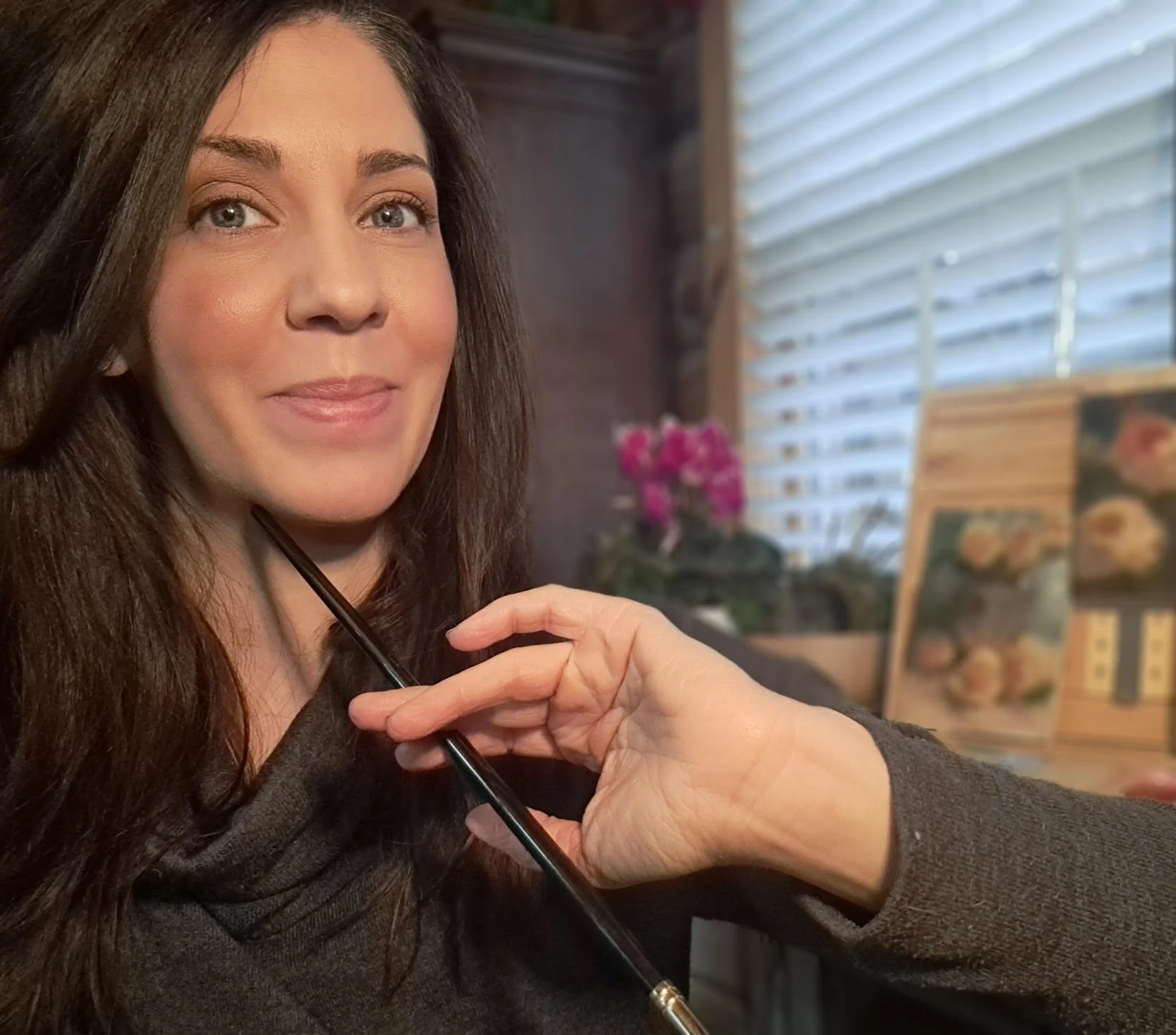
Andrea is a wife to Michael, a homeschooling mom to two girls, and a self-taught artist, writer, and art educator living in North Alabama. She loves the outdoors, the beauty of ordinary life, and the sometimes messy, always meaningful work of raising a family and creating a life rooted in faith.
A lifelong love of creating has become a way for Andrea to explore and share what she believes to be true: that God is still revealing His goodness and beauty all around us, often in the simplest and most unexpected places. Her faith in Jesus is the wellspring of both her art and her writing, and she seeks to create work that does more than simply look beautiful or sound good—it invites people to pause, notice, wonder, and be stirred by the truth, goodness, and beauty of God.
Whether through a paintbrush, a page, or a conversation around the table, Andrea hopes what she creates will point beyond itself and draw others toward the One who made it all.